
Walking outside in St. Louis on a summer morning, you might feel like you have just stepped naked into a warm, wet blanket. But as bad as that muggy air makes your clothes stick and your hair frizz, it is doing something far worse to the wooden parts of your home. Between the four rivers and the Mississippi, St. Louis is saturated with humidity. Their average relative humidity levels are just over 70% year-round, the perfect breeding ground for the wood-destroying pests that call St. Louis home.
Living in moisture-rich climates, these critters feed on the floor joists, deck boards, and support beams of your home. Feasting silently while the homeowner is unsuspecting can cause thousands of dollars in damage before you even notice their presence. If your floors feel squishy or you notice small piles of sawdust around any wooden structure of your house, reaching out to professionals from pointepestcontrol.com will help you stop the issue before it gets out of hand.
Why Humidity Is a Hidden Catalyst for Wood Pests?
These bugs require two essential elements to survive: cellulose and moisture. Well, in this city, they have too much of both. When humidity consistently exceeds 60%, wood absorbs significant moisture from the air, thereby softening its fibers and making it easier for insects to chew through. Moreover, moisture takes longer to evaporate, meaning colonized pests can remain in one place for months and even years without fear of the wood drying out in the process. Imagine leaving a sponge on your kitchen counter; it would remain wet, develop mold, and become a breeding ground for bacteria.
The elements in your home act in much the same way when it is humid outside. The only difference is that this process occurs inside your walls and under your floor, remaining unnoticed until the structure is weakened and visible damage becomes apparent.
The Wood-Destroying Pests Most Affected by Humidity
-
Termites
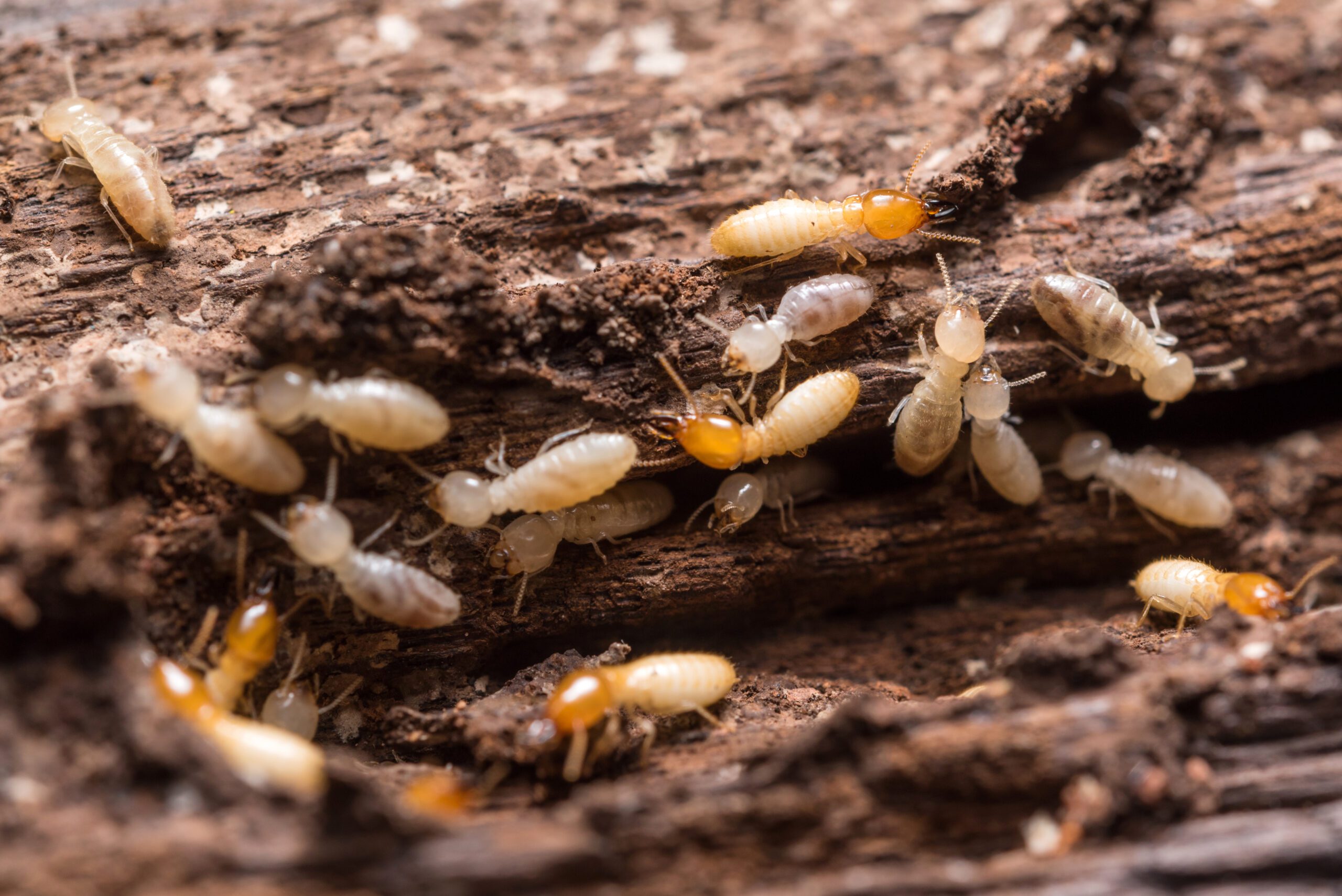
The primary threat to St. Louis homeowners is subterranean termites, which annually cause approximately $5 billion in property damage throughout the U.S. Subterranean termites require moisture to survive and are more prevalent in high-humidity areas. Thus, in St. Louis, humid summers and the moisture-rich clay soil provide perfect conditions for a termite colony to form right under your foundation, no more than several feet away from it.
2.Carpenter Ants
Carpenter ants do not eat wood; they bore holes in it, unlike termites. The only woods that attract carpenter ants are those that have been softened by decay. In St. Louis’ humidity, wooden things such as deck posts, window frames, and roof eaves tend to stay wet for prolonged periods. So, you can be sure that your house is being hollowed out by a community of up to 50,000 ants, through their tunnels running up and down the various places.
3.Powderpost Beetles
Tiny beetles lay eggs in wood cracks, and their larvae spend months tunneling throughout timber, leaving a fine, powdery dust. The most significant factor in the pests’ life cycle is humidity, as wood with a moisture content above 14% becomes a suitable environment for larvae to develop. Additionally, untreated wood in houses located in St. Louis is becoming increasingly susceptible to infestations as it experiences spikes in infestations throughout the spring and summer.
Why Professional Pest Control Matters in Humid Climates
There is almost a whole menagerie of wood-destroying pests and bugs living in the walls, in between the floors, or outside in crawl spaces. They particularly favor living spaces in St. Louis because the high humidity level is beneficial to them. Pointe Pest Control experts have developed unique St. Louis home inspection methods and precisely know all the weak spots in local construction. They apply moisture meters to identify problem areas long before any visible damage appears, and they can differentiate between pest species that matter greatly, as their treatment approaches vary significantly.